Why Do I Still Love My Abusive Partner? The Truth About the Bond
 Reviewed by Andrea Barthwell, M.D., D.F.A.S.A.M. | Addiction Medicine Specialist | Medical Reviewer
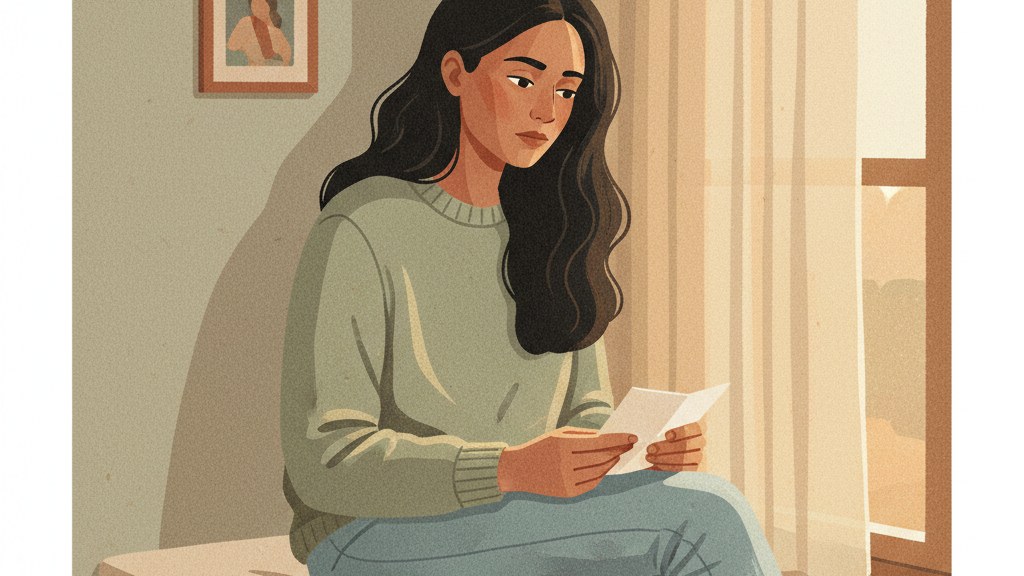
Why do I still love my abusive partner?
You are probably asking this in the middle of something painful. A bad night. The morning after a good week. The week after you almost left. The hour after you read an article that named exactly what they have been doing to you and then realized you still want to call them. The question carries shame in it, and that shame is usually wrong. Loving someone who hurts you is not evidence that something is broken in you. It is evidence that two real systems are running at the same time inside you, and they are pointing in different directions.
The article on signs of emotional abuse covers what abuse looks like, in case you are still trying to figure out whether what is happening qualifies. This article is for after that question. You have named what is happening. You also love them. This article walks through why both can be true at once, why the love is usually real, why real love does not require you to stay, the specific reasons the love persists even when you know better, and what to do with the feeling when reality is asking you to leave.
The one-minute version
You probably love them because love is real, and it is also a separate system from safety. The chemistry that produces love runs on attachment, shared history, and the genuinely good moments you had together. None of that disappears because the harm is also real. Most people who love an abusive partner are not confused. They are holding two true things at once.
Love is not a verdict on whether a relationship should continue. The decision to leave is about whether the relationship is survivable, not about whether the love is real. People leave parents they love, jobs they love, friends they love, when the relationship is no longer compatible with their lives. The same logic applies here, even when the cultural narrative around romantic love tries to make it feel like a betrayal.
The love will probably fade over time, slower than you want, and never quite all the way. That is not a problem to solve. It is a cost of having had this relationship. The cost is real. So is the cost of staying.
Why the love is real, and why that is not the point
Many articles on this topic try to convince you that the love is not really love. The love is, they say, just trauma bonding. Just chemistry. Just the dopamine of intermittent reinforcement. As if naming the mechanism makes the feeling less real, and once you understand the mechanism you should be able to stop feeling it.
That framing is well-intentioned and it does not work. Mechanism does not erase feeling. You can understand exactly why the bond formed (love bombing, then intermittent warmth, then the trauma chemistry of harm-followed-by-reconciliation, all on top of the ordinary attachment formed during the good weeks) and still feel the love. The understanding gives you context. It does not give you exit.
Here is what the framing misses: the love can be real and the relationship can still be unsurvivable. These are not in tension. Real love is one of the most powerful experiences a person can have, and it can grow in a relationship that is also dangerous to be inside. The early good months were probably not performance. The shared jokes, the sleepy mornings, the way you knew what they meant before they finished the sentence, the specific tenderness that exists only between two people who have built something private together. That was real, and it produced real love. The harm is also real. The presence of one does not retroactively cancel the other.
The reason this matters is that arguing yourself out of the love does not work as a strategy. Many people who finally leave an abusive relationship spent months or years trying to convince themselves the love was fake, then leaving when the love still felt real anyway. The leaving was the right move. The conviction that the love had to be fake first was a detour. You can leave with the love intact. People do, every day.
Love and safety are different systems
This is the part of the picture that culture gets wrong, repeatedly, and that often keeps people inside relationships that are no longer survivable. The cultural script around romantic love says, in various forms: if it is real love, it can survive anything; love conquers all; love is supposed to be hard; if you really love them you would not leave. None of these are accurate descriptions of how love actually works inside an abusive relationship. They are leftover Romantic-era fairytale physics, applied to situations where they do not hold.
Love is the felt experience of attachment, care, and bond. It runs on its own internal logic. Safety is the absence of ongoing harm. It runs on a completely different system, the one your body uses to decide whether a place is survivable. These two systems are loosely related but not the same. You can love someone whose presence in your life is harming you. You can love a parent who hit you. You can love an addict who is dying. You can love a partner whose treatment of you is eroding your ability to function. The love does not require you to stay inside the harm.
People understand this clearly in non-romantic relationships. No one tells you that leaving a job you love because it is destroying your health is a failure of love. No one tells you that limiting contact with a parent who hurt you means you never really loved them. The logic is well understood in those contexts. Romantic love is the one domain where the culture insists that real love must absorb whatever happens to you. That insistence is wrong, and it is the script that often does the most damage to people in your situation. Naming it as a script makes it easier to set down.
The decision to leave an abusive relationship is not a decision about whether the love was real. It is a decision about whether the relationship is survivable. The love can be real and the answer to the survivability question can still be no.
Five reasons the love persists when you know better
Knowing intellectually that the relationship is harmful does not make the love stop. The love runs on systems that do not respond to knowledge. Several specific mechanisms keep the feeling alive even when reality is asking you to leave.
The good version is a real person, not a fantasy
In an abusive relationship, there is often a version of your partner that exists during the good periods who is genuinely warm, attentive, funny, and loving. That version is not a mask, and it is not performance. It is a real part of who they are, and it is the version you bonded with. Many people who have left abusive partners report that the hardest part of leaving was knowing they would never see the good version again. They were not deluded about the bad version. They were grieving the loss of access to a person who genuinely existed, even though that person could not be reliably reached.
The good version cannot be kept separate from the bad version, which is the structural problem. The two come as a package. But the existence of the good version is what makes the love feel non-negotiable, because the love is not for the abuse; it is for the part of them that is genuinely lovable. That part is real. So is the love it produced.
Shared history that no one else has
You have years (or months, or a decade) of inside jokes, shared trauma, history that nobody else in your life knows. This is one of the deepest forms of human connection. The person who knows you the way they know you may genuinely never be replaced. Not because no one else could love you, but because no one else holds the specific archive of the two of you. The love runs partly on that archive. Losing the relationship means losing the only other person who remembers the trip, the apartment, the joke from the wedding, the cat you adopted together. That loss is real, and it is one of the underestimated costs of leaving any long relationship, abusive or not.
The trauma-bond chemistry
This is the mechanism most articles focus on, and it is real, even if it is not the whole story. Cycles of harm followed by reconciliation produce a specific neurochemical bond. The article on trauma bonding covers the chemistry in depth, and what happens to your brain in an abusive relationship walks through the five brain systems most affected: dopamine on the relief, cortisol during the harm, oxytocin during the reconciliation. The result is an attachment that runs deeper than ordinary love and is significantly harder to break. The trauma-bond chemistry overlays the ordinary love that was already there and produces a felt experience that is more intense, more obsessive, and more resistant to extinction than non-trauma-bonded love.
The trauma-bond piece is what makes the love feel like it cannot be talked out of. It is not the only piece. But it is the piece that explains why the love does not behave like ordinary love. Ordinary love fades when the relationship stops working. Trauma-bonded love can persist for years past the relationship’s end, and surfaces hardest at the moments when leaving requires the most strength.
The hope of the redemption arc
A specific kind of love runs on the future you can imagine. You can picture them realizing what they have done, apologizing, changing, and the relationship becoming what it could have been. The fantasy is so vivid you can almost taste it. The hope is itself a form of love: love for the possibility, love for what the relationship could be if the good version stabilized. This kind of love is one of the hardest to release because it is not attached to any specific event in reality. It lives in your imagination, where they can be the person you need them to be.
The article on why do I keep going back to my ex covers this fantasy in the post-relationship version, but the same mechanism operates inside the relationship. The hope is not a sign that you should stay. It is a sign that part of your love is going to a partner who has not actually shown up yet, may never show up, and is being kept alive by you in the absence of evidence.
Identity merging
In long relationships, the boundary between you and them softens. Your daily rhythms shape around each other. Your friends become their friends. Your future plans assume them. You may have built a life that is structurally hard to disentangle from theirs: shared finances, shared house, shared children, shared community. When you imagine leaving, you are not just imagining ending a relationship. You are imagining ending a version of yourself. The love is partly love for the life you have built and the self you have become inside it. That love is real, and the dissolution it requires is real loss, even when the leaving is the right move.
What to do with the love
The first move is to stop trying to argue yourself out of feeling it. The love is going to be there for a while, regardless of what you decide about the relationship. Trying to make the feeling go away as a precondition for leaving means waiting for something that may not happen on the timeline you need. People leave abusive relationships while still loving the abuser, every day, and the leaving is what eventually makes the love fade rather than the other way around.
The second move is to separate the love from the relationship’s continuation. Love is one piece of information. Safety is another. The compatibility of the relationship with your life is a third. The presence of love does not automatically mean the relationship should continue, in the same way that the presence of grief does not mean a parent should not have died. The love is true. The relationship’s unsustainability is also true. Holding both is the more honest position than choosing one and pretending the other is not real.
The third move is to let the love be one of the things you grieve when you leave. Many people who successfully leave abusive relationships report something like a long, low-grade mourning that surfaces for months or years. They are not regretting the decision. They are feeling the cost of it. The cost of leaving an abusive partner you loved is real. The cost of staying with an abusive partner you love is real. The question is not which one has no cost. The question is which one is survivable.
The fourth move is to wish them well, eventually, at a distance. This sounds counterintuitive in a culture that often frames leaving as requiring you to hate them. You do not have to hate them to leave. You can love them, leave them, want them to get the help they need, and refuse to be the person who provides it. Wanting their wellbeing from a safe distance is one of the cleanest emotional postures available to you, even though it takes years to reach.
The cultural script worth setting down
The narrative that real love means staying through anything is doing damage to people in your situation, and it is worth naming explicitly. It comes from religion, from literature, from movies, from your family, from your own childhood. The narrative says: if you really loved them, you would forgive everything. If you really loved them, you would have hope. If you really loved them, you would never give up on them.
This is not how love works. Love does not require you to absorb harm to be real. Love does not require you to wait through indefinitely escalating abuse for a redemption arc that may not arrive. Love does not require you to make yourself smaller, more compliant, more available to harm, to prove its authenticity. The version of love that requires all of this is not love. It is sacrifice in love’s name, and the recipient is rarely the partner whose actions warrant the sacrifice. The recipient is usually the script.
The cleanest reframe is the one that comes from outside romantic culture. Consider how love operates for a friend whose addiction is destroying them. You can love them deeply and still refuse to give them money. You can love them and still refuse to drive them to their dealer. You can love them and still tell them you will not be available until they get help. None of this is a betrayal of the love. All of it is the love showing up the way it actually serves the person it is loving. The same logic applies in your situation. Refusing to continue absorbing harm is one of the ways love can show up. The refusal is the loving move, even when it does not feel that way.
When loving them is information vs. when it is the bond
Sometimes the love really is pointing somewhere true. Specific signatures distinguish the cases where staying or returning is a real consideration from the cases where the love is doing the keeping. The signatures include: the partner has done observable work over many months, the original deal-breakers have been actually addressed, your nervous system is steady in their presence rather than braced, friends who know the relationship well say something has genuinely shifted, the love you feel includes hope grounded in evidence rather than hope grounded in fantasy.
If most of those signatures are present, the love may be information. Even then, slow. People who get back together successfully usually describe a long courtship-like period before resuming the relationship, where both parties act as though the previous version did not exist and have to earn each other again. Not a return. A beginning.
If those signatures are not present, the love is not the relationship-continuing signal. It is the bond. The bond is real and it is also not asking you to make the right decision; it is asking you to keep feeling something familiar. You can honor the feeling without obeying it.
The toxic relationship quiz gives a behavior-by-behavior frame for assessing whether the relationship has crossed into territory that the love cannot save. If the relationship has included any physical danger, the article on how to leave a narcissist covers safety planning specifically, because leaving an abusive relationship is the moment of highest risk and the planning matters.
When to get help
If you are asking this question while still in the relationship, this is the moment professional support becomes the strongest investment you can make. A therapist who specializes in domestic violence dynamics or trauma can hold the love and the leaving at the same time, which is the specific kind of presence that most friends and family cannot offer for the time you need it. Friends often default to either condemnation of the partner or pressure to stay, and neither is what helps. A trained third party can simply witness the actual situation and help you build the slow plan that leaving usually requires.
If you are asking this question after having left, the same recommendation applies, plus the specific support groups for people in this exact pattern. SLAA and ACA both address the loving-an-abusive-partner dynamic directly. Many community-based domestic-violence organizations also run free support groups specifically for people in the post-leaving phase, where the love-grief is often the loudest experience.
You are not the only person who has loved someone who hurt them. The shame of the question is louder than the question deserves. The love is real, the harm is real, and the existence of the love is not the verdict on whether the relationship should continue. The verdict comes from whether the relationship is survivable for the life you have left to live. The love can be honored and the relationship can still need to end. Both at once. That is the most honest place to stand.
People also ask
Why do I still love my abusive partner even though they hurt me?
Is it possible to love someone and still need to leave them?
Will the love ever fade?
How do I know if my love for them is real or just trauma bond?
Keep Reading
Is Your Relationship Toxic?
Answer 10 questions and get a clear picture of what is happening and what to do about it.
Discover Your Boundary Style
Take our free quiz and get personalized tips for your boundary type.
Take the QuizThis content is for informational purposes only and is not a substitute for professional medical advice, diagnosis, or treatment. Always seek the advice of a qualified health provider with any questions you may have regarding a medical condition.