What Happens to Your Brain in an Abusive Relationship?
 Reviewed by Andrea Barthwell, M.D., D.F.A.S.A.M. | Addiction Medicine Specialist | Medical Reviewer
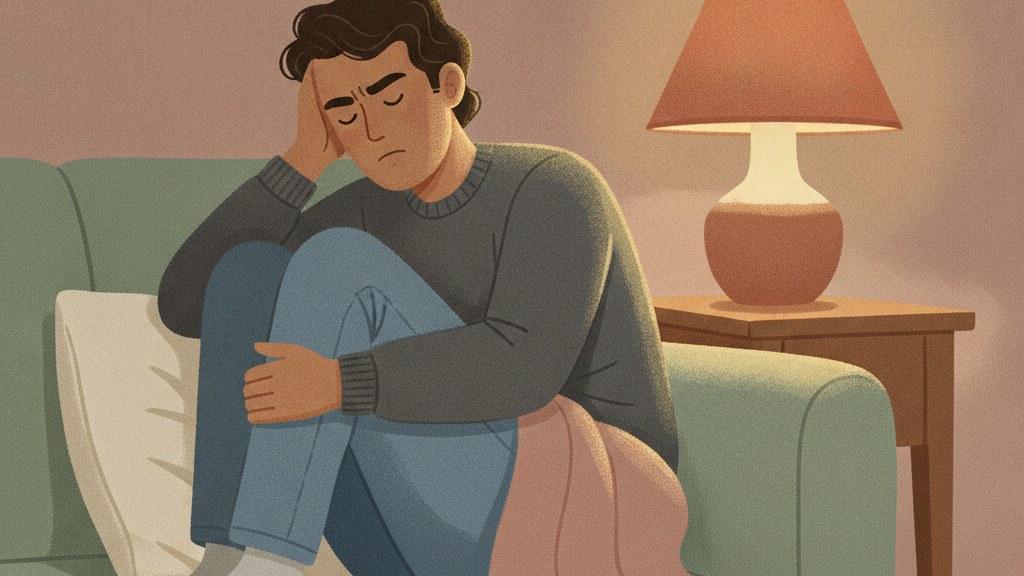
What happens to your brain in an abusive relationship?
The short answer: a lot, and not in ways that match how the experience feels from inside. Most people who have been in a long-term abusive relationship describe a slow erosion: thinking more slowly, sleeping worse, feeling perpetually tired, losing memory for things they used to track easily, finding ordinary conversations harder. The cultural script tells you that those feelings are character flaws (you got lazy, you got moody, you got sensitive). The neuroscience says something different. Your brain has been doing what brains do under chronic threat. The thinking and memory systems are being slowly downregulated to make resources available to the survival systems, which have been running on high for so long that they have become the default state.
The article on trauma bonding covers the attachment chemistry. This article is the broader body-level picture: which brain systems are most affected by sustained relational threat, what they do under stress, what the felt experience of each one is, and what recovery actually looks like at the cellular and behavioral level once the threat is removed.
The five systems most affected
Five systems do most of the work in producing the brain-and-body changes that come from a chronically abusive relationship. None of them are exotic. They are the same systems your brain uses for ordinary threat detection. The difference is that ordinary threat is event-shaped (a near-miss in traffic, a sharp word from a friend) and the system returns to baseline within minutes or hours. Relational threat in an abusive relationship is environment-shaped. The system does not return to baseline because the environment has not stopped containing the threat. Over months and years, the temporary stress-response state becomes the default operating state.
The five systems, in roughly the order they get hit:
1. The amygdala (the alarm)
The amygdala is the brain’s threat-detection system. It runs constantly in the background and tags anything in the environment as either safe, neutral, or threatening, mostly without consulting your conscious thought. Under normal conditions it fires briefly when something genuinely concerning shows up (a loud noise, an angry face), then quiets back down once the situation resolves.
In an abusive relationship, the amygdala is recalibrated. It learns that the threat source is one specific person whose presence is unpredictable, and it begins firing whenever cues associated with that person appear. Their footstep on the stair, their tone shifting, their phone notification, the specific way they breathe when something has bothered them. The amygdala does not need them to actually do anything to fire. The associated cues alone are enough.
Felt experience: a constant low-grade alertness that the body cannot turn off, especially when in the partner’s presence or anticipating their presence. Heart rate slightly elevated. Shoulders tight. Sleep light. The amygdala has decided your home is a place where something bad could happen at any moment, and the body is staying ready.
Long-term imaging studies on chronic-abuse survivors show measurable enlargement of the amygdala, consistent with the system being repeatedly activated.
2. The HPA axis (the cortisol pump)
When the amygdala fires, it triggers the hypothalamic-pituitary-adrenal axis, which releases cortisol into the bloodstream. Cortisol is the body’s main stress hormone. Short bursts of it are useful (they sharpen attention, mobilize energy, suppress non-urgent functions like digestion and immunity). Sustained baseline elevation of cortisol is corrosive. It disrupts sleep architecture, suppresses immune function, raises blood pressure, alters appetite, accelerates aging at the cellular level, and changes how the body stores fat.
In an abusive relationship, the cortisol baseline rises because the amygdala is firing too often for the system to return to rest. Over months and years, the body adapts by setting cortisol higher as the new normal, the way a thermostat would set a higher baseline temperature if the heater kept running. The article on walking on eggshells describes the behavioral version of this state. The cortisol is the chemistry underneath the behavior.
Felt experience: tired-but-wired exhaustion, sleep that does not refresh, frequent illness, weight changes that do not respond to ordinary intervention, digestive issues, a sense of being chronically run-down without identifiable cause. Most people in long-term abusive relationships describe this state. Most of them are told by doctors who do not know the relationship context that they need to manage stress better, get more sleep, exercise. The interventions are correct but they cannot do their work while the stress source is still present.
3. The prefrontal cortex (the thinker)
The prefrontal cortex handles planning, impulse control, abstract reasoning, working memory, and emotional regulation. It is the slow, sophisticated part of the brain. Under acute stress, the prefrontal cortex is partially shut down by the survival circuitry so that resources can flow to faster systems. This is useful in an emergency. It is corrosive in chronic threat conditions, because the prefrontal cortex stays partially offline for months and years, not minutes.
The piece on emotional flooding covers what this shutdown looks like in acute conflict. Across months, the chronic version produces something different: a gradual loss of access to your own higher-order thinking even outside of confrontations. You forget words mid-sentence. You re-read paragraphs three times. You misplace things you used to track effortlessly. You make decisions that, an hour later, you know were not characteristic of you. The prefrontal cortex is the thing being asked to function in conditions it was not designed for, and it is producing the predictable output of any complex system running below its operating specifications.
Felt experience: cognitive fog, slower processing speed, harder time concentrating, more frequent errors at work, the felt sense that you have gotten dumber. You have not gotten dumber. Your prefrontal cortex is being asked to do its work while the survival systems below it are running at high alert, and there is only so much metabolic resource to go around.
4. The hippocampus (the memory and context system)
The hippocampus does two specific jobs: it consolidates new memories from short-term into long-term storage, and it tags experiences with contextual information (when did this happen, where, who was there, what was going on). Without functional hippocampus activity, memories form as disconnected fragments rather than as part of a coherent narrative.
Sustained cortisol exposure is toxic to hippocampal cells. Studies on chronic-stress populations (including combat veterans, abuse survivors, and chronically depressed individuals) show measurable hippocampal volume reduction. The volume loss is partly reversible once the stress source is removed and cortisol normalizes.
Felt experience: memory becomes patchy. You remember some things vividly (often the bad ones, which were emotionally intense enough to encode through other systems) but lose track of basic chronology. You cannot reconstruct what happened in the relationship in a coherent timeline. When your partner asserts that something happened differently than you remember, you doubt yourself, because in fact your memory has been getting less reliable. This is one of the reasons gaslighting lands so effectively in long-term abusive relationships: the abuse itself has produced the conditions under which your memory works less well.
5. The reward system (dopamine and oxytocin)
The reward system handles bond formation and the felt experience of pleasure, motivation, and connection. Dopamine drives the seeking and pursuit of reward. Oxytocin handles bonding, especially after positive social or physical contact.
In an abusive relationship that follows the cycle-of-abuse pattern (tension, incident, reconciliation, calm), both systems get hijacked. The reconciliation phase produces oxytocin (after-fight closeness, makeup sex, reconciliation conversation) that bonds you more strongly to the partner who just caused the incident. The dopamine system gets trained on variable-ratio reinforcement (sometimes warm, sometimes cold, never predictable), which is the most addictive pattern of reward delivery known to neuroscience. The article on intermittent reinforcement covers this mechanism in depth.
Felt experience: a bond that feels deeper and more inescapable than ordinary attachment, paired with an inability to stop seeking the relief that comes after the harm. The longer the relationship runs, the stronger the bond becomes, even as the relationship itself gets worse. This pairing is what makes leaving feel impossible from the inside, and what makes the going-back urges so persistent after leaving. The article on why do I keep going back to my ex covers the post-leave version of this in detail.
What recovery looks like at the body level
If you actually leave and maintain no contact, here is the rough biological trajectory.
Weeks 1 to 4 are the worst. Cortisol is still elevated and the body has not received the signal that the threat is gone. Sleep is fragmented. The amygdala continues firing on associative triggers (their handwriting, their cologne, songs you shared, places you went together). You feel worse, not better, because the threat-detection system is still running but you have lost access to the bonded relief that used to come after the threat. This is the withdrawal phase. Many people relapse here because the discomfort is acute and the previous relationship was the only known solution.
Weeks 4 to 12: cortisol baseline starts to drop. Sleep begins to consolidate. The amygdala still fires on triggers but recovers faster between firings. You can feel the difference between waking up after a normal night and waking up after a normal night following a bad dream about the relationship, and the former starts becoming more common. The prefrontal cortex starts coming back online. You may notice you can read a book again, or follow a conversation through a complicated topic, or remember what you walked into the room for. These small recoveries are real and they are the early signal of broader recovery.
Months 3 to 12: structural recovery becomes measurable. If you were in a research study, hippocampal volume would start increasing. Cortisol baseline would normalize to pre-abuse levels for most people. Sleep architecture would normalize. The amygdala would stop tagging every cue as threatening and would begin discriminating again between genuine threat and ambient noise. You start having full days where the relationship is not in your foreground attention. New people begin to feel possible.
Year one to three: deeper recovery. The prefrontal cortex fully comes back into regulation of the survival systems. Hypervigilance fades from the default state into a context-dependent response. The dopamine system recalibrates to find steady reward satisfying instead of boring. Many survivors describe a felt change around the eighteen-month mark, where the previous version of themselves (the one who was always braced) starts to feel like a person they used to be rather than a person they currently are.
The timeline depends on three factors: how long the relationship lasted (longer relationships take longer to recover from), whether contact actually stops (each contact partially resets the clock by re-triggering the amygdala and the reward circuit), and whether the survivor has access to trauma-informed support. Therapy with someone trained in EMDR, somatic experiencing, or sensorimotor psychotherapy accelerates the timeline meaningfully. Group support also helps, both for the witnessing and for the regulation that comes from being in a room with other people who are not currently in threat.
What actually helps the recovery
The interventions are unglamorous and almost all of them are physical rather than cognitive.
Sleep first. The single most useful intervention is sleep, because almost every other recovery system depends on it. If sleep is severely disrupted, talk to a doctor early about short-term sleep support. The cortisol cycle and the sleep cycle are mutually reinforcing; restoring one helps restore the other.
Daily exercise, especially something rhythmic. Walking, swimming, cycling, dance, slow running. The rhythmic, bilateral physical movement helps regulate the autonomic nervous system in a way that conversation cannot. Twenty minutes a day is the threshold most studies converge on. The article on trauma bonding names this as one of the recovery practices that consistently works.
Co-regulation. The nervous system regulates faster around other regulated nervous systems. Time in person with calm, steady people (friends, family who get it, support groups, a therapist) helps your system recalibrate. Isolation slows recovery. Many people coming out of abusive relationships isolate because the relationship trained them to, and the isolation prolongs the body-level symptoms even when the relationship is over.
Trauma-informed therapy. Specifically, modalities that work at the body level rather than only the cognitive level. EMDR, somatic experiencing, sensorimotor psychotherapy, neurofeedback. Talk therapy alone can help with making sense of what happened, but the body-level changes often need body-level interventions to resolve.
Slow exposure to steady reward. Predictable routines. Reliable friendships. Consistent meals. A pet. A daily practice. The dopamine system needs new data showing that reward can be reliable, not just variable. The first few weeks of steadiness feel boring, which is the exact signal that the recalibration is working. The green flags in a relationship article covers what the steady version of intimacy looks like once you are ready to consider new relationships.
Patience with the timeline. The body recovers at the speed it recovers. Pushing the process does not work. Most people underestimate the duration of nervous-system recovery and feel like they are failing when, twelve months in, they still feel reactive in certain situations. The first year is the heaviest. The second year is meaningfully easier. The third year is when most people describe feeling like themselves again.
When recovery needs more than time and support
If you find that your symptoms are not improving over the first three months of no contact, or if they are getting worse instead of better, professional help becomes the right move rather than the optional one. Specifically: panic attacks that come out of nowhere, dissociation (the feeling of being outside your body or watching yourself), suicidal thoughts, severe sleep disruption that does not respond to ordinary intervention, or chronic physical symptoms (cardiac, gastrointestinal, autoimmune flare-ups) that started during the relationship. These are signs that the nervous system has crossed into clinical territory and that PTSD or complex PTSD evaluation is appropriate.
The toxic relationship quiz can help organize what was happening in the relationship if you are still trying to figure out whether what you experienced rises to the level of abuse. The article on signs of emotional abuse gives the broader inventory. If physical safety is a factor in leaving or in maintaining no contact, the article on how to leave a narcissist covers safety planning. The National Domestic Violence Hotline at 1-800-799-7233 is free, confidential, and available 24/7.
You are not broken. The brain changes are real, they are documented, and they are mostly reversible. The cluster of symptoms you have been carrying has a name and a mechanism. The recovery has a trajectory. The fact that you have been functioning at all while your nervous system has been running this hard for this long is the evidence of resilience, not the evidence of inadequacy. Most of the work from here is letting the body do what the body knows how to do, in conditions that finally allow it to.
People also ask
Does emotional abuse actually change your brain?
Why can’t I think clearly when my abusive partner is in the room?
How long does it take for the brain to recover after leaving?
Is what I am feeling ‘real’ or just stress?
Keep Reading
Is Your Relationship Toxic?
Answer 10 questions and get a clear picture of what is happening and what to do about it.
Discover Your Boundary Style
Take our free quiz and get personalized tips for your boundary type.
Take the QuizThis content is for informational purposes only and is not a substitute for professional medical advice, diagnosis, or treatment. Always seek the advice of a qualified health provider with any questions you may have regarding a medical condition.