How to Leave a Narcissist: Safety Planning and What to Expect
 Reviewed by Andrea Barthwell, M.D., D.F.A.S.A.M. | Addiction Medicine Specialist | Medical Reviewer
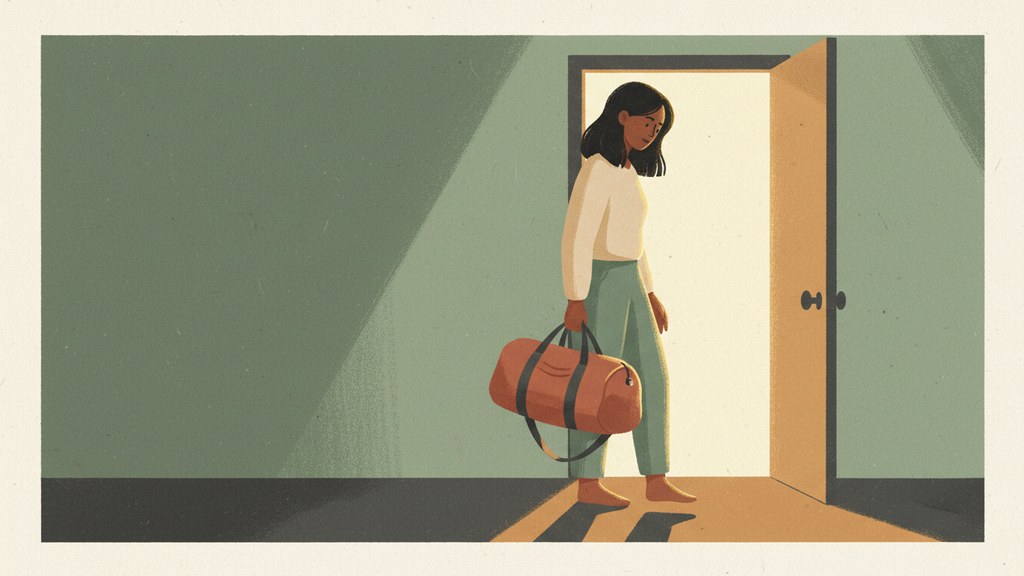
How to leave a narcissist: the part nobody tells you first
Most articles about how to leave a narcissist start with checklists. This one starts with the truth: you have probably tried to leave before. You may have tried more than once. You are not weak. You are not “addicted to the chaos.” You are inside a dynamic designed specifically to make exiting harder than entering, and most of what you have read so far has not told you that out loud.
Leaving a narcissistic partner, parent, or family member is not the same as leaving any other kind of relationship. The normal advice, the kind that works for ending healthy partnerships, often makes things worse here. “Have an honest conversation” gives them a runway to dismantle you. “Try couples counseling first” hands them a new audience to perform for. “Give yourself closure” assumes they are capable of providing it. None of this applies to a relationship with someone who weaponizes vulnerability against you. This is doubly true if yours is a covert narcissist, because the quiet, victim-posturing type is expert at making your leaving look like cruelty toward a fragile, wounded person.
This guide is for the people who already know they need to leave and need to understand how. It is part of a broader look at toxic relationship dynamics and it covers the safety planning, the practical execution, the first weeks, and the long work of becoming yourself again. If you are in immediate danger, scroll to the crisis section at the bottom of this page.
Before you leave: the planning months
The single most common mistake in leaving a narcissist is announcing the decision before the exit is built. Narcissists fight loss of narcissistic supply the way most people fight an actual threat to their lives. They will escalate. They will love bomb. They will drain accounts. They will turn your support system against you. The window between “I have decided to leave” and “I have left” is the window where you are most exposed, so you want it to be as short as possible. If the person you are leaving is a malignant narcissist, meaning the narcissism comes with antisocial behavior, deliberate cruelty, and paranoia, treat every step below as the minimum rather than the plan, and bring in a domestic abuse advocate before you move.
Build a financial runway in private
If your finances are shared, open a separate account in your name only, at a different bank than your joint accounts. Reroute paychecks if you can do so quietly. Set up online statements rather than paper, so nothing arrives at the shared address. If you do not have credit in your own name, start a card in your name only. If you cannot open accounts without their knowledge, contact your bank or a domestic violence financial advocate. Many banks have programs that help survivors of financial abuse.
Document what you can. Photos of joint financial statements. A list of shared assets and debts. The location of important paperwork. If your name is on a lease, mortgage, or business, talk to a lawyer about your options before you leave. A one-hour consultation often costs less than you think, and many family law attorneys offer free initial calls.
Gather your documents
Birth certificate, passport, social security card, driver’s license, insurance cards, medical records, prescription bottles, immigration documents, restraining orders, custody paperwork, tax returns for the last three years. If you have children, gather their documents too. Make copies. Store one set with a trusted person who is not in your shared social circle. Store another in a safe location only you can access.
Build an exit location
Where will you go on day one? On day thirty? A friend’s spare room, a family member, a temporary rental, a domestic violence shelter. Have one primary option and one backup. If you are planning to stay with someone, tell them ahead of time so they are not surprised, and so the narcissist cannot pre-empt you by reaching them first.
Quietly rebuild your support system
Narcissists isolate the people they exploit, and isolation is only one strand of the larger pattern laid out in coercive control examples. By the time you are planning to leave, you may have fewer close relationships than you did at the start of the relationship. Start reconnecting. A coffee with an old friend. A check-in with a sibling. You do not have to disclose the plan to leave. Just start putting people back in your life who are not theirs.
Decide whether to tell them
For most situations, the answer is to leave first and explain after, if at all. You do not owe a narcissist a final conversation. You do not owe them closure, an explanation, or a chance to say their piece. The “final talk” almost always becomes the beginning of hoovering rather than the end of the relationship.
The exception is if leaving without notice would cause greater harm, for example if you share children and need to coordinate, or if you genuinely believe a calm exit is possible. Even then, deliver the news in a public place if safety is a concern, with an exit route already in place, and with at least one person who knows where you are and when you should be back.
The exit: what the day looks like
The day you leave a narcissist is one of the most disorienting days of your life. Plan it like you would plan a logistical operation, because that is what it is.
Pick the window
If you live together, the safest exit usually happens when they are not home, ideally at work, ideally for a stretch of hours that gives you time to move what you need and get out. If you do not have a window like that, consider asking a friend or family member to come with you while they are home, because their presence often de-escalates the situation. Some people coordinate with local police for a civil standby, where an officer is present during the move. This is not for everyone, but it is an option.
Take what you can carry
Documents first. Then medications. Then clothing for two weeks. Then sentimental items that cannot be replaced. Furniture, kitchen things, decorative items, books, all of it can be replaced or retrieved later. Do not let the loss of possessions delay your exit by even one day. People die over couches and photo albums. You can buy new things. You cannot buy new safety.
Send the message, then disengage
If you choose to communicate the decision, do it in writing. Brief. Factual. Without explanation or accusation. “I am leaving the relationship. I am not available for conversation. Further contact will be through [attorney name, family member, or another channel].” Then go silent. Do not read their replies. Do not respond to anything. Block them on every channel where blocking is safe. If you cannot block because of legal or co-parenting reasons, route everything through a third party or a parenting app like OurFamilyWizard.
The first 24 hours are when narcissists deploy their hardest tactics. Crisis texts. Threats of self-harm. Apologies that sound exactly like what you have been waiting for. Promises of therapy. Calls from their family asking you to “just talk.” This is the moment where having a support person physically with you matters most. They are the ones who answer the phone, screen the messages, and remind you why you left.
The first weeks: what to expect
The first month after leaving a narcissist is brutal in a specific way that nobody warns you about. The grief covers more than the person. You are mourning a future, an identity, a story you told yourself, and a nervous system pattern your body has been running on for years.
The hoovering campaign
Expect contact attempts within days. Maybe hours. They will run through their full inventory of hoovering tactics in roughly this order: the apology, the crisis, the “I’ve changed” performance, the gift, the threat. If you blocked them, expect them to find another channel: a new number, a mutual friend, a social media account, a message through your family. The campaign usually intensifies for two to four weeks, then drops off as they redirect their attention to new supply. It often returns, weeks or months later, when their new arrangement falls apart.
The smear campaign
Expect mutual friends to start asking what happened. Expect to hear that the narcissist has been telling people you are unstable, having an affair, on drugs, mentally ill, or that you “snapped” out of nowhere. This is DARVO in slow motion: deny, attack, reverse victim and offender. You can spend energy correcting the record, but a smear campaign is rarely answered that way. Most of the people worth keeping will work it out in time. Some good ones will believe it for a while first, and losing them is a real loss rather than proof they never counted.
A smaller version of this happens through the flying monkeys, the mutual contacts who carry messages on the narcissist’s behalf. “They really seem to have changed.” “They’re worried about you.” “Would you consider just one conversation?” These people are often well-meaning. They are also being used. You can stay polite while declining every single one of these overtures. If the claim keeps landing and you want to weigh it properly rather than argue about it, can a narcissist change? sets out what would have to be true.
The doubt
Around week two or three, your nervous system starts to settle. And the moment it does, doubt rushes in. Maybe you overreacted. Maybe the relationship was not that bad. Maybe you are the problem after all. This is the worst part of leaving a narcissist, because it comes from inside you, and it sounds like clarity.
It is not clarity. It is the trauma bond reasserting itself. The pattern of idealize, devalue, discard lives in your body as much as it lived in the relationship, and once the immediate threat is gone, your nervous system reaches for the part of the cycle that felt good. The idealization. The good days. The version of them you fell in love with. Letting yourself remember the good parts is normal. Acting on the feeling that you should go back is the part to resist. The companion piece why do I still love my abusive partner? covers what to do with the love that does not fade just because you left, including the cultural script that “real love means staying” that often does the most damage in this window.
Keep a list. On paper, in a note on your phone, somewhere. Write down ten things they did that you cannot reconcile with the version of them your mind is reaching for at 2 a.m. Re-read it. The list is not for them. It is for you.
Six months out: rebuilding identity
Most people are surprised by how much rebuilding leaving a narcissist requires. Leaving the relationship is one piece. The other piece is recovering a self that was reshaped to fit theirs.
You may not remember what you used to like. What you used to think. What you used to want. People who leave narcissists often describe a period of feeling like a stranger in their own life, where small choices, what to eat, what to watch, where to spend a Saturday, feel impossibly hard because they were made for someone else for so long that you lost the muscle of preference.
This is normal. It is also reversible. You build identity back the way you built it the first time: through small experiments. Try things. Throw out the ones that do not fit. Keep the ones that do. Therapy with a trauma-informed practitioner, ideally someone who specifically understands narcissistic abuse, accelerates this process. So does community with other survivors, in person or online.
The boundary work that comes next is its own project. Once you have left the narcissist, you start noticing patterns in your other relationships, the way you over-explain, the way you apologize for taking up space, the way you read a room before you speak. That work has its own pace. It does not have to start on day one. Day one, the only goal is to stay gone.
If you suspect the relationship you left was abusive in ways you have not fully named, the toxic relationship quiz can help you organize what you experienced. It is not a diagnosis. It is a starting point for putting language to patterns you may have been minimizing.
Crisis resources
If you are in immediate danger, call 911.
If you are not in immediate danger but need help planning a safe exit, talking through a situation, or finding shelter:
- National Domestic Violence Hotline: 1-800-799-7233. Available 24/7, free, confidential, and multilingual. They can connect you with local shelters, legal aid, and safety planning.
- Crisis Text Line: Text HOME to 741741. Free, 24/7 crisis support via text. Useful if a call is not safe.
- thehotline.org: Live chat support and detailed safety planning resources. Use a private browsing window if you share devices.
- myplan.app: A safety planning tool designed for people in abusive relationships, free and confidential.
If you are reading this in a context where the narcissist might see your search history, clear this page, close the tab, and switch to a private window for further research. Your safety includes your digital tracks.
You can leave. Other people have, including people who were more entangled, more isolated, and more convinced it was impossible than you are right now. The first step is deciding the relationship is going to end. Everything after that is logistics.
People also ask
How long does it take to leave a narcissist?
Should I tell a narcissist I am leaving?
Why is leaving a narcissist so hard?
What happens after you leave a narcissist?
Keep Reading
Is Your Relationship Toxic?
Answer 10 questions and get a clear picture of what is happening and what to do about it.
Discover Your Boundary Style
Take our free quiz and get personalized tips for your boundary type.
Take the QuizThis content is for informational purposes only and is not a substitute for professional medical advice, diagnosis, or treatment. Always seek the advice of a qualified health provider with any questions you may have regarding a medical condition.