Silent Treatment Examples: What It Looks Like in Real Life
 Reviewed by Andrea Barthwell, M.D., D.F.A.S.A.M. | Addiction Medicine Specialist | Medical Reviewer
Silent Treatment Examples: What It Actually Looks Like
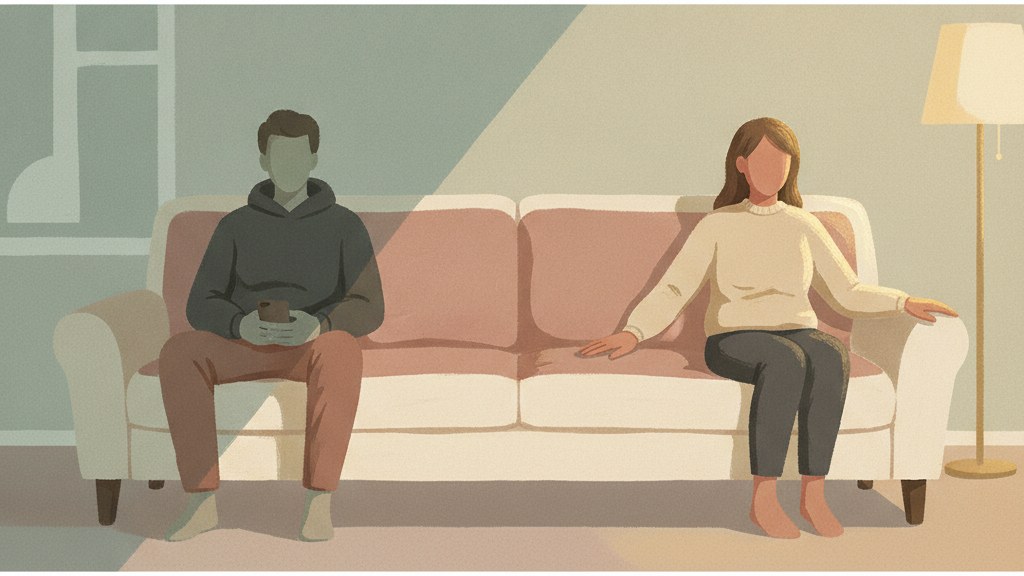
Most people who get the silent treatment spend a long time unsure whether it even counts as anything. There was no yelling. Nobody threw a plate. On paper, nothing happened. That is exactly what makes it so hard to name. The following silent treatment examples are the specific, ordinary shapes it takes, each paired with what the silence is actually doing underneath, because the behavior is quiet but it is not neutral.
If you have ever spent two days trying to earn your way back into a conversation you did not know you had been thrown out of, this is for you. For the fuller picture of why people reach for silence and what it does to the person on the receiving end, the silent treatment in relationships pillar has the definition and the research. This piece is the inventory: what it looks like at the kitchen table, in the group chat, at the family dinner, in the office.
How to read these examples
Not every silence is the silent treatment, and the difference matters, so hold one test in your mind as you go. Healthy space announces itself and comes back. The silent treatment withholds itself and makes you guess. A person who says “I need a bit, let’s pick this up tonight” is taking space. A person who goes wordless and cold with no timeframe and no acknowledgment that you exist is doing something else. The examples below are all the second thing.
At home with a partner
1. The full freeze-out
You walk into the kitchen and say good morning. Nothing. You ask if they want coffee. Nothing. They move around you like you are a piece of furniture, no eye contact, answering direct questions with a shrug or by leaving the room. This goes on for a day, maybe three.
What the silence is doing: It is turning your own home into a place where you do not exist. The refusal of eye contact is the core move, because being looked at is how we confirm we are real to another person. Withholding it is a way of saying “you are not here” without a single word you could quote back to them later.
2. “I’m fine”
You can feel that something is wrong, so you ask. “Are you okay?” A flat “I’m fine.” “Are you sure, you seem upset.” “I said I’m fine.” The words say one thing and the temperature says another, and now you are stuck, because they have technically answered while telling you nothing.
What the silence is doing: This is silence with a trapdoor. If you push, you are accused of not listening (“I told you I’m fine”). If you back off, the cold continues. The point is not to communicate a feeling. It is to keep you anxious and working, while denying you anything solid enough to respond to. It is a close cousin of gaslighting, because it makes your accurate read of the room into the thing that is wrong with you.
3. The disproportionate sentence
You loaded the dishwasher wrong, or forgot to text back, or had a mild disagreement about weekend plans. Something small. In response, you get forty-eight hours of arctic silence.
What the silence is doing: The length is the message. When a minor thing produces a punishment this size, the mismatch teaches you that any friction, however tiny, can cost you days of the relationship going dark. So you start pre-checking everything you say and do. The silence does not need to happen often once you have learned to live in fear of it. That fear is what walking on eggshells actually feels like from the inside.
4. Silence right after you held a boundary
You finally said no to something, or named a thing they did that hurt you, or asked them to be accountable for a broken promise. The conversation had barely ended before the wall came down. Now they will not speak to you, and somehow you are the one apologizing.
What the silence is doing: This is the most revealing timing there is. The silence arrives as a direct consequence of you asserting yourself, which tells you what it is for. It is a punishment for the boundary, engineered to make holding the next one feel too expensive to bother with. If every act of self-respect on your part is met with a freeze-out, the silence is not a mood. It is a training tool.
With a parent or family member
5. The parent who stops speaking to you
You did something they disapprove of. You moved away, married the wrong person, took the wrong job, set a limit on holiday visits. Now a parent will not return your calls, or sits stone-faced through dinner, answering only in clipped syllables, waiting for you to grovel your way back into their good graces.
What the silence is doing: It is reaching for the oldest hold a parent has, which is a child’s need for their approval. Even as an adult, that wiring runs deep. The silence says the relationship is conditional on your compliance, and it is betting that the discomfort of being frozen out by a parent will pull you back into line faster than any argument could.
6. The silence performed for an audience
At the family gathering, they are warm and chatty with everyone else and pointedly, visibly cold to you. They laugh at your sibling’s joke and go flat when you speak. Everyone can feel it. Nobody names it.
What the silence is doing: The audience is the whole point. A private freeze-out only punishes you. A public one punishes you and recruits witnesses, so that your isolation becomes something other people can see and, often, quietly attribute to you. You end up managing not just the silence but the story other people are building about why you deserve it. That recruiting move is a soft form of triangulation.
With a friend
7. The read receipt that never gets answered
You texted something normal. You can see it was read. Hours pass, then a day, then two. Meanwhile they are posting, active, clearly on their phone. You are left staring at “Read 9:14 AM” trying to work out what you did.
What the silence is doing: Digital silence has a cruelty the in-person version lacks, because it gives you constant proof they are choosing not to respond. The visible online-ness is doing work. It converts an absence into a pointed, ongoing decision you get to watch in real time. The withholding is the message, and the platform makes sure you cannot miss it.
8. The freeze-out over a normal disagreement
You disagreed about something two friends can reasonably disagree about. Instead of hashing it out, they went cold, canceled plans without explanation, and let a chill settle over the whole friendship until you chased them down and smoothed it over.
What the silence is doing: It is showing you the ceiling of the friendship’s tolerance for conflict. A friendship where any disagreement gets you frozen out is one where you are only safe as long as you agree. That is a narrow place to live, and worth naming honestly to yourself even when the good parts of the friendship are real.
At work
9. The withheld information
A coworker is upset with you, so they stop looping you into the threads you need, sit on the file you are waiting for, and answer your direct questions with the bare minimum. Your work slows down and you cannot fully explain why to anyone else.
What the silence is doing: At work the silent treatment usually wears the disguise of professionalism, which makes it hard to call out. Nobody is technically doing anything wrong; they are just slow, just busy, just not quite responsive to you specifically. But the pattern is a punishment, and it uses your job performance as the pressure point. The fix is to route around it in writing and stop pleading with it, which the how to respond to the silent treatment guide covers script by script.
The silence that reappears like nothing happened
10. The reset
After two days, they are suddenly normal again. Chatty, affectionate, asking what you want for dinner as if the last forty-eight hours did not occur. The relief is so enormous that you go along with it, grateful to have them back, and the original issue vanishes into the pile, unaddressed.
What the silence is doing: The clean reset is the part that keeps the whole cycle running. Because nothing gets resolved, the same conflict is guaranteed to return, and the next silence is already loaded. The reset also trains you to associate the end of silence with relief so strong that you stop wanting to risk it by bringing up what happened. If naming it afterward restarts the freeze, that reaction is your answer about what the silence was for.
What these examples have in common
Strip away the setting and every example above runs on the same engine. One person withdraws communication. The other person reads the withdrawal as a threat to the relationship and rushes to fix it. The fixing hands the first person exactly what the silence was for: control over when it ends, proof that it works, and a partner, child, friend, or colleague who has been trained to fold. It is one of the purest forms of invalidation there is, because it does not just dismiss your feeling. It refuses your whole self a response.
The behavior stays quiet, which is precisely why it survives. There is nothing to point to, no line you can read back, no bruise. Just a cold that fills the house and a growing sense that you are always one wrong move away from being erased again.
What to do when you recognize these patterns
Naming it is the first move, and you have just done that. The response that actually works is close to the opposite of what your body is screaming for. In short: open the door to a conversation once, calmly, then stop chasing, because chasing is the payoff the silence is fishing for. Keep living your life through it instead of freezing in place. Watch closely for what happens when the silence breaks, because a person capable of repair can hear “going quiet for two days really affected me” and stay in the room, while a person using silence as a weapon treats that sentence as a brand new crime.
The full playbook, with word-for-word scripts for partners, parents, friends, and coworkers, is in how to respond to the silent treatment. If the silence tends to arrive in the middle of a hard conversation rather than stretching over days, that is closer to stonewalling, and how to respond to stonewalling covers that conversation-scale version. Learning to state a need plainly under that kind of pressure is its own skill, and building assertive communication is the groundwork that makes every script easier to say out loud.
If these examples describe not an occasional bad week but the basic weather of your relationship, the silence has stopped being a communication style and become the relationship itself. When it travels with other control tactics, it belongs in the wider inventory laid out in signs of emotional abuse. The toxic relationship quiz gives you a behavior-by-behavior read on where yours currently sits, which is often clearer than trying to judge it from the inside, since the silence has been training you to doubt your own read for a long time.
You are not too sensitive for wanting to be spoken to. Wanting a response from someone who claims to love you is not a character flaw. The silence taught you to treat that need as an imposition. It was protecting a tactic, not telling you the truth about yourself.
Content reviewed by Dr. Barthwell, addiction medicine specialist. This article is for informational purposes only and is not a substitute for professional therapy or counseling.
People also ask
What are the most common silent treatment examples?
How is the silent treatment different from someone just needing space?
Is giving someone the silent treatment abuse?
What should I do when I recognize these examples in my relationship?
Keep Reading
Is Your Relationship Toxic?
Answer 10 questions and get a clear picture of what is happening and what to do about it.
Discover Your Boundary Style
Take our free quiz and get personalized tips for your boundary type.
Take the QuizThis content is for informational purposes only and is not a substitute for professional medical advice, diagnosis, or treatment. Always seek the advice of a qualified health provider with any questions you may have regarding a medical condition.